


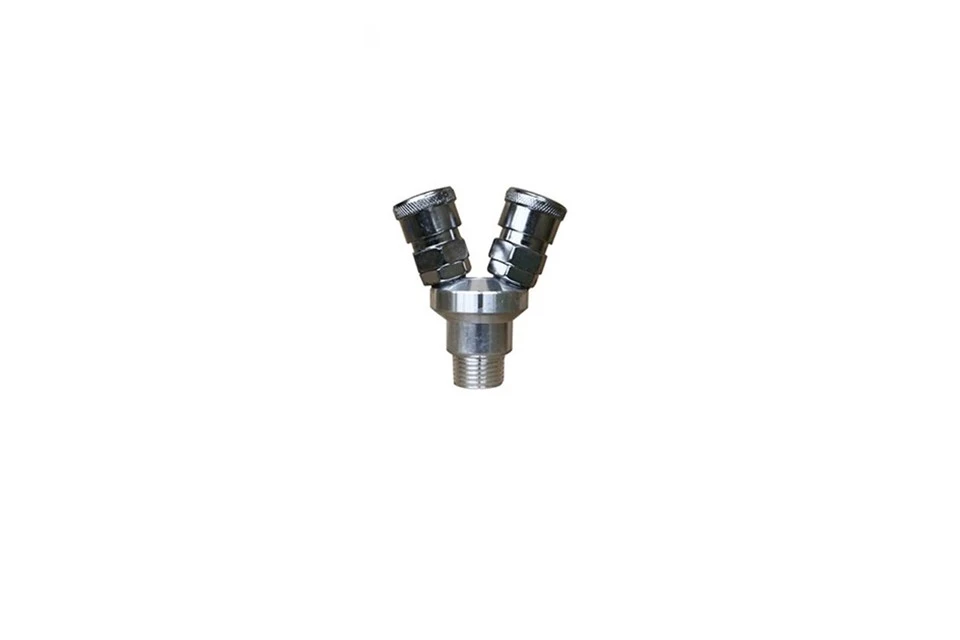

Functions and uses

Connecting pipes:
It is mainly used to connect two air ducts, so that air can flow smoothly between different pipe sections, ensure the integrity and continuity of the ventilation system, and realize the transmission and distribution of air, such as connecting various branch air ducts in the central air conditioning system.
Change direction or position:
Some two-way joints have a certain angle or bend, which can be used to change the direction of the air duct to meet the requirements of the building structure or spatial layout, so that the air duct system can better fit the actual installation environment.

Categorized by material

Metal material:
such as stainless steel two-way joint, which has the advantages of high strength, corrosion resistance, high temperature resistance, etc., and is suitable for some occasions with high environmental requirements and special conveying medium, such as ventilation systems in chemical, food processing and other industries; The galvanized steel plate two-way joint is relatively low in cost and has a certain anti-rust ability, which is widely used in general industrial and civil building ventilation projects.
Non-metallic materials:
the common ones are PVC plastic two-way joints, which have the characteristics of light weight, low price, easy installation, etc., and are often used in some places where the ventilation requirements are not high and the corrosion resistance of the material has certain requirements, such as laboratory ventilation, toilet ventilation, etc.; There are also FRP two-way joints, which have good corrosion resistance and insulation, and are suitable for ventilation environments with special requirements, such as humid environments or workshops with corrosive gases.

Categorized by connection method
Clamp connection:
the use of clamp to tightly fix the air duct and the two-way joint together, with the advantages of firm connection, good sealing performance, fast installation speed, etc., suitable for the connection of circular air duct, especially in some ventilation systems that need to be quickly installed or often need to be disassembled and maintained.
Threaded connection:
Threaded connection: including internal thread and external thread, the connection with the air duct is realized by the rotation of the thread. This connection method is more convenient to install and disassemble, and has good sealing, and is often used in small air ducts or occasions that require high accuracy of installation position.

FAQ
Q: How to deal with the excessive deviation of the center line of the two air ducts during installation?
A: Adjust fitting angles to compensate for deviations, cut duct correction ports, or replace deflectable fittings.
Q: Local wear and perforation on the inner wall, what are the common problems?
A:The air velocity is too high, the dust content is too high, or the joint material is not abrasion resistant.
Q: What may be the problem if the joint is loose after long-term use and the air duct connection?
A: Thermal expansion and contraction of air ducts lead to stress release, clamp rust failure, or no expansion or contraction during installation.
Hot Tags: duct two-way joint, China duct two-way joint suppliers


