You Professional Engineering Cables Suppliers
Yijia Hardware Industrial Supermarket, as an innovative leader in the industry, is committed to providing one-stop hardware procurement solutions for various industrial enterprises, construction projects, and DIY enthusiasts. Our large-scale 4,000-square-metre supermarket showcases more than 20,000 hardware products from world-renowned brands as well as high-quality local manufacturers.
-
![Solder Wire YH]() Solder Wire YHWelding Handle Wire YH: The right-hand man of the welding machine In all kinds of welding work, a welding wire with excellent performance is the key to ensuring smooth welding. Today, let's take a closer look at a highly...view more
Solder Wire YHWelding Handle Wire YH: The right-hand man of the welding machine In all kinds of welding work, a welding wire with excellent performance is the key to ensuring smooth welding. Today, let's take a closer look at a highly...view more -
![Copper Power Cable VV]() Copper Power Cable VVCopper Power Cable VV: A reliable partner in power transmission Product attributes and parameters Copper power cable VV, the full name of copper core conductor PVC insulation and PVC sheathed power cable. The first "V"...view more
Copper Power Cable VVCopper Power Cable VV: A reliable partner in power transmission Product attributes and parameters Copper power cable VV, the full name of copper core conductor PVC insulation and PVC sheathed power cable. The first "V"...view more -
![Rubber Cable YZ]() Rubber Cable YZRubber Cable YZ: A reliable power transmission partner for industrial scenarios For those who need to move frequently or use cables in complex environments, a durable, safe, and adaptable cable is essential. Rubber cable YZ has unique...view more
Rubber Cable YZRubber Cable YZ: A reliable power transmission partner for industrial scenarios For those who need to move frequently or use cables in complex environments, a durable, safe, and adaptable cable is essential. Rubber cable YZ has unique...view more


Why Choose Us
Convenient Shopping
We provide convenient online and offline shopping channels, the online platform is easy to operate, customers can browse and place orders anytime and anywhere.
Production Market
Yijia hardware has a wide range of mechanical and electrical sales, with footprints in Europe, America, Asia, Africa, Latin America and other countries.
Professional Team
We terms of service, we have a team of professionally trained staff who not only have deep knowledge of hardware products, but also can provide accurate product recommendations and technical support according to the specific needs of customers
Diversified Demand
We From basic screws, nuts, tools and measuring tools, to high-end industrial equipment and electrical components, we have everything to meet the diverse needs of different customers at different project stages.

High conductivity and efficiency: Cables like copper are excellent conductors, efficiently carrying electrical current with minimal resistance and energy loss.
Improved electrical performance: Some cables offer a larger capacity for current, have consistent electrical characteristics, and provide reduced noise compared to other systems.
High-speed data transmission: High-performance cables are designed for high-speed applications and can deliver data without congestion, often eliminating the need for multiple cables for a single task.
Reliability: Cables provide a stable, reliable connection, free from signal degradation, interference, or weather disruptions common in wireless systems.
High power factor: For power cables, their capacitance can help improve the line's power factor.
Categories Of Engineering Cables
Medium-Voltage Cables (MV Cables)
Medium-voltage cables are suitable for electrical systems ranging from 1kV to 35kV, commonly seen in industrial power facilities and medium-scale urban grids. These cables are essential in substations and power distribution systems. Due to the higher voltage requirements, MV cables are designed with premium insulation materials to meet stricter performance and safety standards.
High-Voltage Cables (HV Cables)
High-voltage cables are employed in systems above 35kV and serve as the core infrastructure for long-distance power transmission. With rigorous insulation standards to ensure reliability and safety, HV cables are crucial in long-distance transmission systems, particularly in large-scale power grids.
Specialty Cables
Specialty cables, such as mineral-insulated, fire-resistant, and low-smoke zero-halogen (LSZH) cables, are designed for specific environments and unique purposes. These cables offer advanced properties, like fire resistance, high-temperature tolerance, and corrosion resistance, making them suitable for challenging environments such as tunnels, subways, and nuclear facilities where safety and reliability are paramount.
Low-Voltage Cables (LV Cables)
Low-voltage cables, typically used in systems up to 1kV, are commonly employed in buildings for lighting, power supply, and other everyday needs. In both commercial and residential projects, low-voltage cables are widely used due to their durability, cost-effectiveness, and flexibility. These qualities make them ideal for wiring and connections within structures.
Components Of Engineering Cables
Insulation
Insulation in power cables primarily provides segregation from a conductor and other conductive materials, whether they’re intended to be conductors or not, but also protects it from environmental factors.
Sheathing And Jacketing
Sheathing and jacketing provide an additional layer of protection to cables, safeguarding against physical damage and environmental factors. This layer is crucial for cable longevity and reliability.

Common Engineering Cables Application Areas
Communication Cables
Primarily used for data transmission, communication cables include fiber optic and coaxial cables, commonly found in telecommunications and data center setups. As the demand for high-speed data grows, communication cables with high transmission speed and interference resistance are increasingly important, with fiber optics becoming a top choice.
Control Cables
Control cables are used in automation systems, connecting sensors and controllers within industrial automation setups. These cables require excellent interference resistance and flexibility to ensure reliable signal transmission in complex systems, such as those found on automated production lines.
Instrumentation Cables
Instrumentation cables are designed for precise signal transmission in industries that require accurate control, such as petrochemicals and pharmaceuticals. These cables are often used in environments with high temperatures and pressures, providing interference resistance and high precision to ensure data integrity.
Building Wires
Building wires are used within commercial and residential structures for power and lighting needs. These cables are often made with fire-resistant and easy-to-install materials, such as PVC or LSZH, meeting safety requirements within building environments.
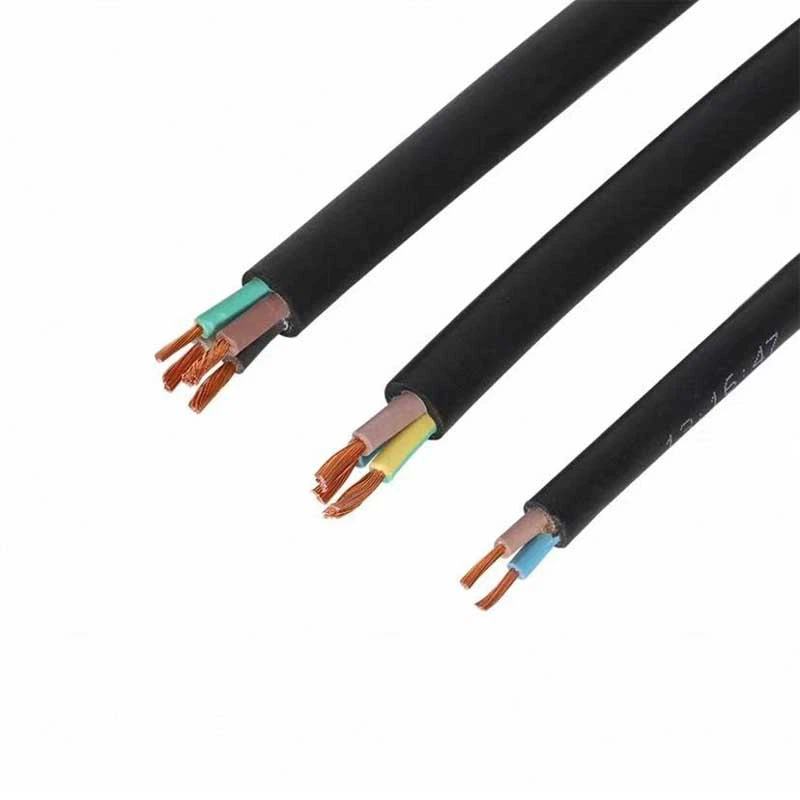
Visual Inspection: Regularly check cables for signs of wear, such as fraying, cracking, or visible damage to the insulation. Any exposed wires should be addressed immediately to avoid electrical hazards.
Check Connectors: Inspect connectors for loose pins or corrosion, as these can lead to signal loss or electrical shorts. Clean connectors gently with a soft cloth and avoid using harsh chemicals that could damage the contacts.
Test Cables for Performance: For data cables, periodically test the speed and performance to ensure that they are still transmitting signals effectively. If you notice slower speeds or intermittent connections, it may be time for a replacement or repair.
FAQ
As one of the leading engineering cables suppliers in China, we warmly welcome you to wholesale engineering cables made in China here from our factory. All customized tools are with high quality and competitive price. Contact us for free sample.